
Factors affecting performance
Computer system performance refers to how quickly a computer can process data and execute instructions.
Width of data bus
- The data bus carries data between the processor and memory (RAM)
- Measured in bits (e.g. 8-bit, 16-bit, 32-bit, 64-bit)
- A wider data bus allows more data to be transferred per fetch–execute cycle
- This means fewer cycles are needed to move the same amount of data

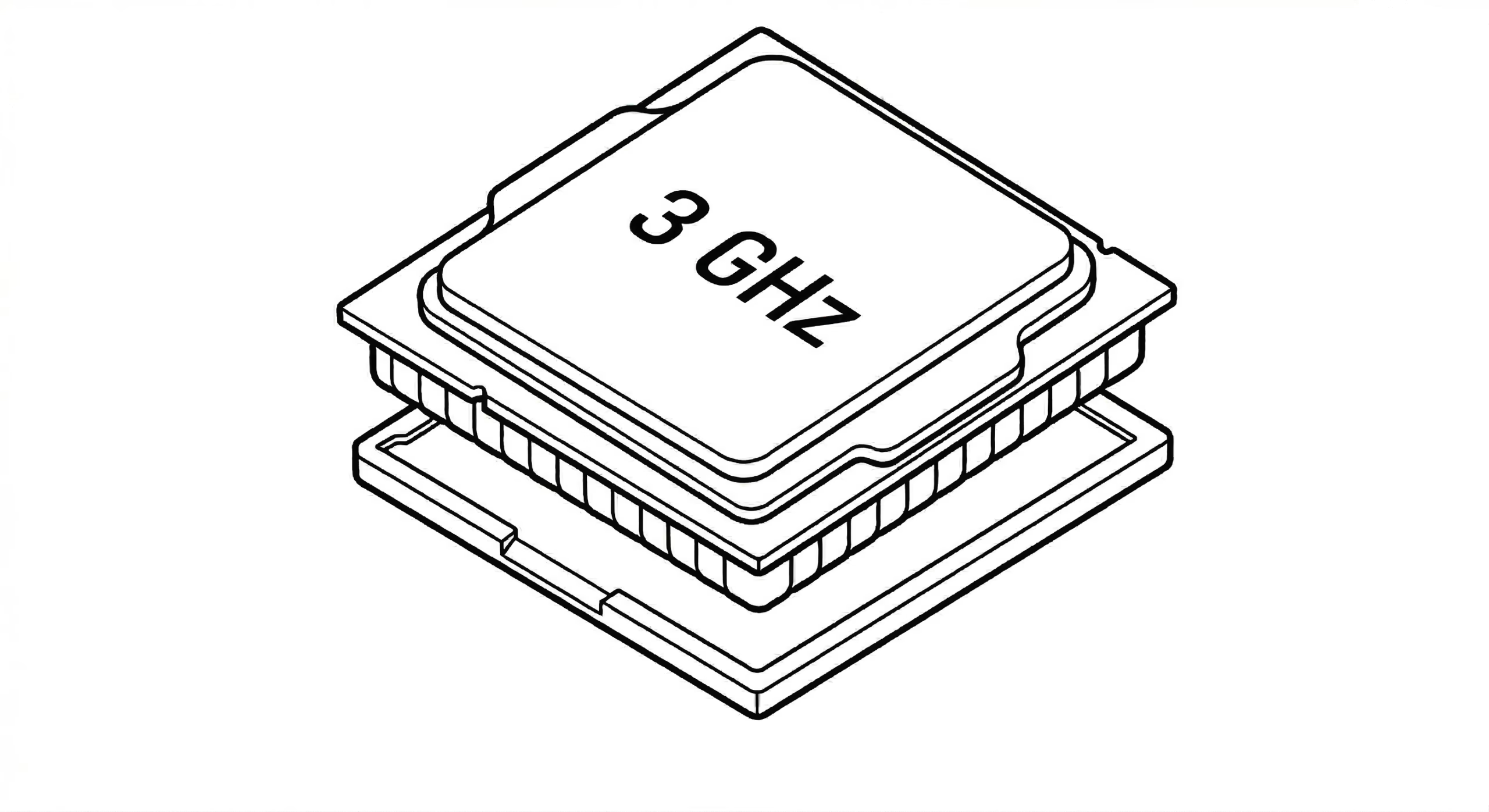
Clock speed
- Clock speed is the rate at which the processor runs the fetch–execute cycle
- Measured Hertz (Hz)
- A higher clock speed means more fetch–execute cycles per second
- This allows more instructions to be processed, improving performance
Number of cores
- A processor can contain multiple cores
- Each core can process instructions independently
- More cores allow the system to run multiple tasks at the same time (multitasking)
- Improves performance when running several programs or complex applications

Width of data bus
Overview
- Cache is a small amount of very fast memory located inside or close to the processor
- Stores frequently used data and instructions
- Cache is faster than RAM, so it can be accessed more quickly by the CPU
Cache hits and misses
- A cache hit occurs when the required data is found in cache → fast access
- A cache miss occurs when the data is not in cache → the processor must access slower RAM
- More cache hits lead to better performance
Study notes
- Cache stores frequently used data and instructions
- Cache is faster than RAM
- Cache hit = faster transfer of data and instructions to the processor
- Cache miss = slower transfer of data and instructions to the processor (from RAM)
- More hits = better performance
