
Internet of Things (IoT)
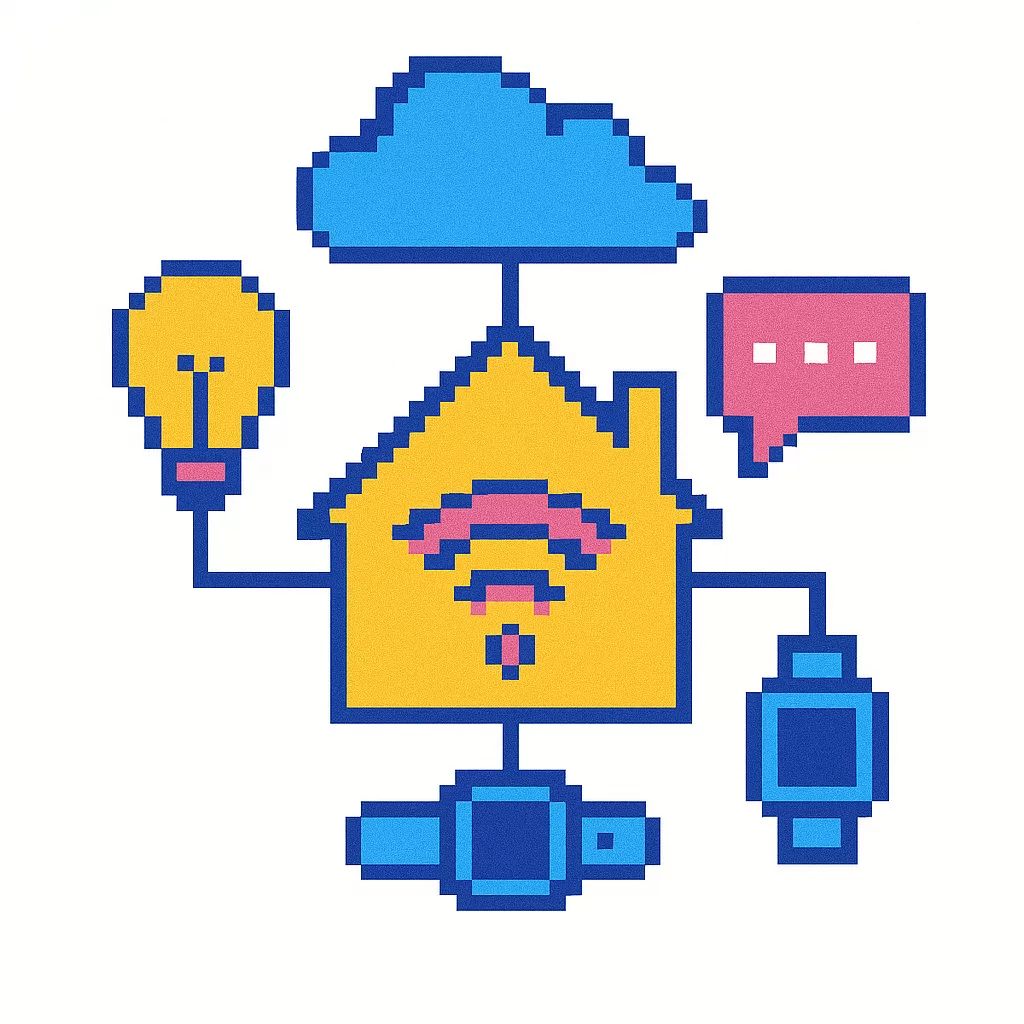
The Internet of Things, or IoT, is when everyday objects are connected to the internet. These objects can collect, send and receive data. IoT devices can talk to each other and can often be controlled remotely using apps or voice commands.
Benefits of the Internet of Things
IoT has been developed to make life easier, more organised and more efficient.
-
Make everyday tasks simpler
(e.g. turning lights on or off using your phone) -
Save energy and money
(e.g. smart thermostats that learn when to heat your home) -
Improve safety and security
(e.g. smart cameras and alarms you can check from anywhere) -
Track and monitor things easily
(e.g. fitness trackers counting steps or monitoring sleep)
Current Applications of the Internet of Things
IoT is already used in many parts of daily life:
-
Smart home devices (e.g. smart lights, plugs, heating and doorbells)
-
Wearable tech (e.g. smartwatches and fitness trackers)
-
Smart speakers (e.g. Amazon Alexa, Google Nest, Apple HomePod)
-
Connected appliances (e.g. fridges that track food or washing machines you can control remotely)
-
Smart city features (e.g. bins that send alerts when full, smart traffic lights)
Internet of Things' impact on Society
Education
-
IoT can help schools save energy and make learning spaces smarter.
-
Smart boards and devices can make lessons more interactive.
Work
-
IoT makes some jobs easier and faster with automatic monitoring and control.
-
However, some jobs may be replaced by automated systems.
Environment
-
IoT can reduce waste and save energy (e.g. smart heating, lighting).
-
But all these devices use electricity and materials, which can add to e-waste and energy use.
Future uses of the Internet of Things
IoT is still growing and could be used in more advanced ways in the future:
-
Smarter homes where devices work together automatically
-
Connected cars that talk to traffic systems for safer driving
-
Smart healthcare devices that send health data straight to doctors
-
Smart cities with everything connected for better energy use and cleaner environments
The Internet of Things connects everyday objects to the internet, helping make homes, workplaces and cities smarter. IoT can save time and energy, but it is important to use it carefully to avoid wasting resources and creating more electronic waste.